In the face of systematic legislative attacks and federal rollbacks targeting LGBTQ rights, the community confronts the most comprehensive assault on its existence in modern American history. The data reveals a stark reality: with 953 anti-LGBTQ bills under consideration across 49 states in 2025 and the implementation of sweeping executive orders at the federal level, this represents a coordinated campaign to systematically eliminate LGBTQ people from public life. The numbers alone tell a chilling story, but behind each statistic lies a human being whose fundamental right to exist with dignity hangs in the balance.
The Unprecedented Scale of Legislative Warfare
Record-Breaking Anti-LGBTQ Legislation
The 2025 legislative session has produced the most concentrated attack on LGBTQ rights in documented history. Trans Legislation Tracker data shows that 953 bills targeting transgender and gender non-conforming people are under consideration across the country, with 120 already passed into law. This represents a staggering escalation from previous years, with the numbersd just two years ago to 75 national bills at the federal level in 2025.
The geographic spread of these attacks is equally alarming. Texas leads with 131 bills under consideration, followed by the federal level with 75 bills, Missouri with 67 bills, and Iowa with 35 bills. These numbers represent not merely legislative proposals but active efforts to criminalize LGBTQ existence, with 23 of the 25 states with gender-affirming care bans including professional and civil penalties for healthcare practitioners, including six states with felony penalties.
Breakdown by Category of Attack
The legislative assault follows a deliberate pattern designed to eliminate LGBTQ people from all aspects of public life. Education and healthcare bills comprise approximately half of all legislation considered in 2025. Healthcare restrictions affect 122 bills seeking to ban gender-affirming care, while 77 bills target bathroom access for transgender people. Perhaps most concerning are the 73 bills designed to eliminate legal recognition of transgender people entirely, effectively attempting to erase their existence from official documentation.
Twenty-seven states have now passed bans on gender-affirming healthcare for transgender children and teenagers, affecting an estimated 40% of transgender youth ages 13 to 17. These laws vary in scope, with some states making it a felony crime to provide certain gender-affirming care to minors, while others prohibit the use of public funds. The Williams Institute data reveals that 24 states have enacted laws banning access to gender-affirming care for transgender youth, with 19 of these bans enacted in 2023 alone.
Bathroom restrictions have similarly proliferated, with 19 states now enforcing laws or policies that prevent transgender individuals from using restrooms that align with their gender identity. Research from the Williams Institute demonstrates that 78,400 additional transgender youth live in states where bathroom or facilities bans were pending in the 2024 legislative session.
Federal Executive Actions and Their Impact
Project 2025 Implementation
The Trump administration has systematically implemented Project 2025’s anti-LGBTQ agenda through a series of executive orders that rescind protections and ban federal recognition of gender identity. More than 75% of proposed policies in Project 2025 pertaining to the limitation of LGBTQ+ freedoms have been implemented by the Trump administration within its first month.
Key implementations include Executive Order 14168, which officially recognizes only two genders, male and female, and Executive Order 14151, which reviewed all government contracts to eliminate those supporting LGBTQ+ rights. The Gender Policy Council, focused on advocating for gender equality, was dissolved through Executive Order 14148. These actions represent a coordinated effort to strip away decades of hard-won civil rights protections.
Military and Federal Employment
The military ban on transgender service members affects approximately 4,240 service members diagnosed with gender dysphoria, representing 0.2% of military personnel. Active-duty personnel had until June 6, 2025, to self-identify for voluntary separation, while reserve members had until July 7, 2025. After these deadlines, the military departments initiated involuntary separation procedures.
The executive orders remove workplace protections for nearly 14,000 transgender federal employees and over 100,000 LGBTQ employees of federal contractors. Executive Order 13672, which prohibited anti-LGBT discrimination by federal contractors, has been rescinded, eliminating protections that had been in place since the Obama administration.
Healthcare and Federal Benefits
The administration has directed federal agencies to withhold funds from medical providers and institutions that provide gender-affirming medical treatments to anyone under 19. This threatens to shut down access to essential healthcare that is already out of reach for many, leading some provider networks to prematurely cancel appointments and announce they are ceasing care altogether.
Federal regulations prohibiting discrimination in healthcare under Section 1557 of the Affordable Care Act have been challenged, with a Mississippi federal judge blocking enforcement of new HHS anti-discrimination rules for transgender patients. This nationwide block allows states to enact legislation limiting transgender access to healthcare.
The Human Cost: Mental Health and Safety Data
Suicide and Mental Health Statistics
The data on LGBTQ youth mental health reveals the devastating impact of legislative attacks and societal discrimination. The Trevor Project’s 2024 National Survey found that 39% of LGBTQ+ young people seriously considered attempting suicide in the past year, including 46% of transgender and nonbinary young people. More than 1 in 10 (12%) LGBTQ+ young people attempted suicide in the past year.
Research demonstrates that discrimination significantly increases suicide risk. LGBT youth who reported experiencing discrimination based on minority sexual orientation were significantly more likely to report self-harm (25.0% vs. 6.3%) and suicidal ideation (23.9% vs. 6.3%) compared to those who had not experienced such discrimination. Among gay or lesbian youth, 37% seriously considered suicide and 19% attempted, compared to 14% and 6% respectively among straight youth.
LGBTQ+ young people of color face even higher risks, with The Trevor Project’s 2023 survey finding that nearly all LGBTQ+ young people of color reported higher rates of attempting suicide than their white peers: 22% of Native/Indigenous youth, 18% of Middle Eastern/Northern African youth, 16% of Black youth, 17% of multiracial youth, and 15% of Latinx youth attempted suicide, compared to 11% of white youth.
Violence and Harassment Data
GLAAD’s 2025 ALERT Desk report tracked 932 anti-LGBTQ incidents in 49 US states and the District of Columbia between May 2024 and May 2025, equivalent to 2.5 incidents every day. Violent attacks resulted in 84 injuries and 10 deaths. Over the past year, 52% of all incidents targeted transgender and gender non-conforming people (485 out of 932 incidents).
The data shows a 14% increase year-over-year in incidents targeting transgender people. This coincides with at least four executive orders from the Trump administration that specifically target transgender Americans and follows $215 million in political ads during the 2024 campaign targeting trans people.
Physical harm affects 23% of LGBTQ+ young people, who reported being physically threatened or harmed in the past year due to their sexual orientation or gender identity. Twenty-eight percent of transgender and nonbinary young people reported physical threats or harm due to their gender identity. Those who experienced physical harm attempted suicide at nearly triple the rate of those who did not.
Impact of Political Environment
The political climate has severely impacted LGBTQ+ youth wellbeing, with 90% of LGBTQ+ young people reporting that recent politics negatively impacted their well-being. Forty-five percent of transgender and nonbinary young people reported that they or their family have considered moving to a different state because of LGBTQ+-related politics and laws.
Research consistently shows that LGBTQ+ young people who reported living in very accepting communities attempted suicide at less than half the rate of those who reported living in very unaccepting communities. This data underscores the critical importance of supportive environments and the harmful impact of discriminatory legislation.
Legal Challenges and Court Battles
Supreme Court Cases
The Supreme Court has agreed to hear multiple cases that will determine the future of LGBTQ rights. In United States v. Skrmetti, decided June 18, 2025, the Court upheld Tennessee’s ban on gender-affirming care for minors in a 6-3 decision, ruling that the ban did not violate the equal protection clause of the 14th Amendment. This ruling affects transgender youth in Tennessee and Kentucky and may embolden lawmakers in other states with similar bans.
The Court has also agreed to hear two cases on transgender athletes for the 2025-26 term: Little v. Hecox from Idaho and West Virginia v. B.P.J. These cases will consider whether state laws restricting participation in girls’ and women’s sports to athletes born female violate the equal protection clause or Title IX.
Additionally, the Supreme Court agreed to consider a challenge to Colorado’s law banning conversion therapy for minors, a case that could have major implications for the 23 states that currently ban the practice.
Federal Court Challenges
Multiple federal lawsuits challenge the Trump administration’s anti-LGBTQ executive orders. In PFLAG v. Trump, filed by the ACLU, Lambda Legal, and other organizations, two transgender young adults and five transgender adolescents and their families challenge the executive order directing federal agencies to withhold funds from medical providers offering gender-affirming care to people under 19.
The Biden administration’s Title IX rules expanding protections for LGBTQ+ students were struck down nationwide after federal judge Danny C. Reeves found they overstepped presidential authority. This ruling affects the 1,500-page regulation that had been blocked in 26 states following legal challenges by Republican states.
State-Level Resistance and Protections
Conversion Therapy Bans
Despite federal rollbacks, 27 states plus the District of Columbia, Puerto Rico, and more than 100 municipalities have instituted bans on conversion therapy. These bans protect LGBTQ youth from practices that The Trevor Project’s research shows more than double an LGBTQ+ young person’s odds of attempting suicide.
However, challenges remain significant. A 2023 report by The Trevor Project identified more than 1,300 active conversion therapy practitioners still operating in all U.S. states except Vermont and Hawaii. The Supreme Court’s agreement to hear the Colorado conversion therapy case could undermine these protections nationwide.
Shield Laws and Sanctuary Policies
Thirteen states and the District of Columbia have passed “shield” laws protecting access to gender-affirming care. These laws protect families and healthcare providers who facilitate access to gender-affirming care from prosecution in states where such care has been restricted.
Maine and Rhode Island joined this group in 2024, while states like California and Illinois have explicit protections for transgender youth that could be reversed if pending legislation passes. These shield laws represent one of the few bright spots in an otherwise dire legislative landscape.
Local Government Resistance
Cities across Republican-led states are finding creative ways to resist flag bans and other anti-LGBTQ legislation. Salt Lake City adopted the Sego Belonging Flag featuring LGBTQ colors as an official city flag. Boise designated its Pride flag as an official city flag to continue flying it despite Idaho’s statewide ban. Missoula, Montana, adopted the Pride flag as its only official city flag.
However, these efforts face legal challenges. Idaho’s Republican attorney general has warned Boise’s mayor to remove the Pride flag or face penalties when the state legislature returns to session.
The Strategic Nature of Current Attacks
Divide and Conquer Tactics
The current legislative assault employs a deliberate “divide and conquer” strategy designed to fracture LGBTQ solidarity by focusing initial attacks primarily on transgender people. This tactic exploits the reality that transgender people, comprising approximately 1% of the population, can be more easily scapegoated while potentially creating the illusion that cisgender lesbian, gay, and bisexual people might remain safe.
This strategy is particularly insidious because it attempts to rewrite the history of the LGBTQ rights movement, which began with transgender women of color like Marsha P. Johnson and Sylvia Rivera leading the Stonewall uprising[previous blog text]. Any attempt to abandon transgender community members represents a betrayal of the movement’s foundations.
Economic and Professional Targeting
The attacks extend beyond individual rights to target the economic foundation of LGBTQ advocacy. Project 2025 laid out plans to review government contracts with entities that enforce a “woke agenda,” including those supporting LGBTQ+ rights. The Gender Policy Council, focused on advocating for gender equality and equal pay, was eliminated.
Professional penalties have been built into many state laws. Twenty-three of the 25 states with gender-affirming care bans include professional and civil penalties for healthcare practitioners, with six states imposing felony penalties. This creates a chilling effect that extends far beyond the specific prohibitions, discouraging healthcare providers from serving LGBTQ patients even in areas not explicitly covered by the bans.
Unity as Strategic Necessity
Historical Lessons from Successful Resistance
The data demonstrates that unified resistance works. Florida’s experience in 2025 provides a powerful example: through sustained advocacy and organizing, every anti-LGBTQ bill filed in the 2025 legislative session was defeated. This success came despite facing the largest Republican supermajority in Florida’s history and a hostile federal climate.
The victory wasn’t accidental. As Equality Florida noted, “We knew the only way to defeat these bad bills was to fight every fight, show up in every room they’re debating our rights, and always outnumber the opposition”. In 2024, Florida advocates stopped or neutralized 21 of 22 anti-LGBTQ bills, demonstrating that sustained, unified resistance can overcome even the most determined opposition.
The Power of Coalition Building
Research on successful social movements demonstrates that coalition building across different marginalized communities creates the most effective resistance. Studies show that successful coalitions form around “shared narratives that formed the backbone of movement coalitions” and work together “against common opponents or enemies”[previous blog text].
The current attacks on LGBTQ people connect to broader patterns of discrimination affecting multiple communities. Labor organizations recognize this connection, with one noting that “LGBTQ+ rights are not separate from workers’ rights. They are workers’ rights”[previous blog text]. This understanding enables coalitions that can leverage the combined strength of multiple movements.
Community Defense Networks
Local communities have demonstrated remarkable creativity in developing immediate protective measures. Grassroots mutual aid groups provide essential services like binders, hormones, and financial support when official systems fail[previous blog text]. These networks create immediate relief while longer-term advocacy efforts work toward systemic change.
Safety training programs, rapid response networks for community members facing harassment or discrimination, and safe spaces where people can access resources and build support networks all represent practical steps that communities can take to protect vulnerable members.
The Path Forward: Strategic Unity in Action
Immediate Protective Actions
The data makes clear that immediate action is necessary to protect LGBTQ community members facing unprecedented threats. Communities must develop comprehensive safety plans that address both individual and collective security needs.
Emergency response systems for community members facing harassment or discrimination require coordination between legal advocates, mental health professionals, and community organizers. Given that 50% of LGBTQ+ young people who wanted mental health care in the past year were unable to get it, developing alternative support systems becomes critically important.
Legal clinics and know-your-rights trainings become essential as federal protections are eliminated. Understanding what protections remain under state and local law, how to document discrimination, and when to seek legal assistance helps community members navigate an increasingly hostile legal landscape.
Long-term Movement Building
The scale of current attacks requires long-term strategic thinking about movement building and political power. Electoral engagement must extend beyond federal races to include state and local elections where many of the most harmful policies originate.
Voter registration and mobilization efforts must prioritize communities most affected by anti-LGBTQ legislation. Research shows that LGBTQ people represent nearly 8% of the adult U.S. population and 22% of millennials[previous blog text]. When effectively organized, this represents significant political power.
Political engagement must also include running for office. Many of the most harmful policies emerge from local school boards, city councils, and state legislatures where small numbers of committed candidates can make substantial differences.
Building Broader Coalitions
The data on intersectional impacts underscores the importance of building coalitions that center the experiences of the most marginalized community members. Black, Indigenous, people of color, disabled, noncitizen, and low-income LGBTQ people remain “the most vulnerable members of the LGBTQ community”[previous blog text].
Effective coalition building requires more than tokenism. Research reveals that movements must avoid “treating marginalized constituencies as mere token participants rather than full partners” and instead create “opportunities for multiply marginalized people to lead coalitions”[previous blog text].
Coalition work must also extend beyond LGBTQ-specific organizations to include racial justice organizations, labor unions, environmental groups, and other movements fighting for social justice. These partnerships create sustained pressure for change while building the skills and confidence of community members across different movements.
The Critical Importance of Sustained Resistance
Learning from International Examples
The global context provides both warning and hope. The Global Equality Caucus reports that several countries have recently passed legislation banning conversion practices, including Cyprus, Iceland, Belgium, and Norway. These victories demonstrate that sustained advocacy can achieve protective legislation even in challenging political environments.
However, the international landscape also reveals the importance of vigilance. Countries that seemed to have strong LGBTQ protections have seen rapid rollbacks when political conditions changed. The U.S. experience demonstrates how quickly decades of progress can be undermined when opponents gain political power.
The Role of Corporate and Institutional Allies
Corporate and institutional support becomes increasingly important as government protections are eliminated. However, recent data shows concerning trends in corporate support. Seattle Pride lost major sponsors amid a national pullback from corporate LGBTQ support[Axios Seattle reference], indicating that even previously reliable allies may retreat under political pressure.
Educational institutions face particular challenges as federal funding threats target diversity, equity, and inclusion programs. Universities and schools that want to maintain inclusive environments must develop strategies that don’t rely solely on federal support or guidance.
Healthcare institutions similarly face pressure as federal funding restrictions target gender-affirming care. Providers committed to serving LGBTQ patients must develop alternative funding sources and support systems to continue providing essential services.
Sustaining Hope and Community Connection
The mental health data underscores the critical importance of maintaining hope and community connection during this crisis. Research consistently shows that LGBTQ+ young people report lower rates of attempting suicide when they have access to LGBTQ+-affirming spaces.
Creating and maintaining these affirming spaces becomes both a form of resistance and a survival strategy. Community centers, support groups, cultural events, and informal gatherings all contribute to the social fabric that helps community members survive and thrive.
The data on community acceptance reinforces this point: LGBTQ+ young people living in very accepting communities attempted suicide at less than half the rate of those in very unaccepting communities. Building accepting communities isn’t just nice to have – it’s literally life-saving work.
Conclusion: The Imperative of United Action
The comprehensive data reveals the scope and severity of current threats to LGBTQ rights and safety. With 953 anti-LGBTQ bills under consideration across 49 states, systematic federal rollbacks of civil rights protections, and documented increases in violence and harassment, the community faces an existential crisis that demands unified response.
The statistics tell a stark story: 39% of LGBTQ+ young people seriously considered suicide in the past year, 932 anti-LGBTQ incidents occurred in just one year, and over 100,000 LGBTQ employees of federal contractors have lost workplace protections. Behind each number lies a human being whose fundamental right to exist with dignity is under attack.
Yet the data also demonstrates the power of unified resistance. Florida’s success in defeating every anti-LGBTQ bill in 2025 shows what’s possible when communities organize effectively. The 27 states that maintain conversion therapy bans provide protection for vulnerable youth despite federal hostility. Local governments finding creative ways to maintain Pride flags and inclusive policies demonstrate that resistance can emerge from unexpected places.
The path forward requires acknowledging that this crisis affects all LGBTQ people, but not equally. Transgender people, particularly transgender youth and people of color, face the most severe and immediate threats. Black, Indigenous, and other people of color within the LGBTQ community continue to experience disproportionate violence and discrimination. Unity cannot mean asking the most vulnerable to wait their turn for safety.
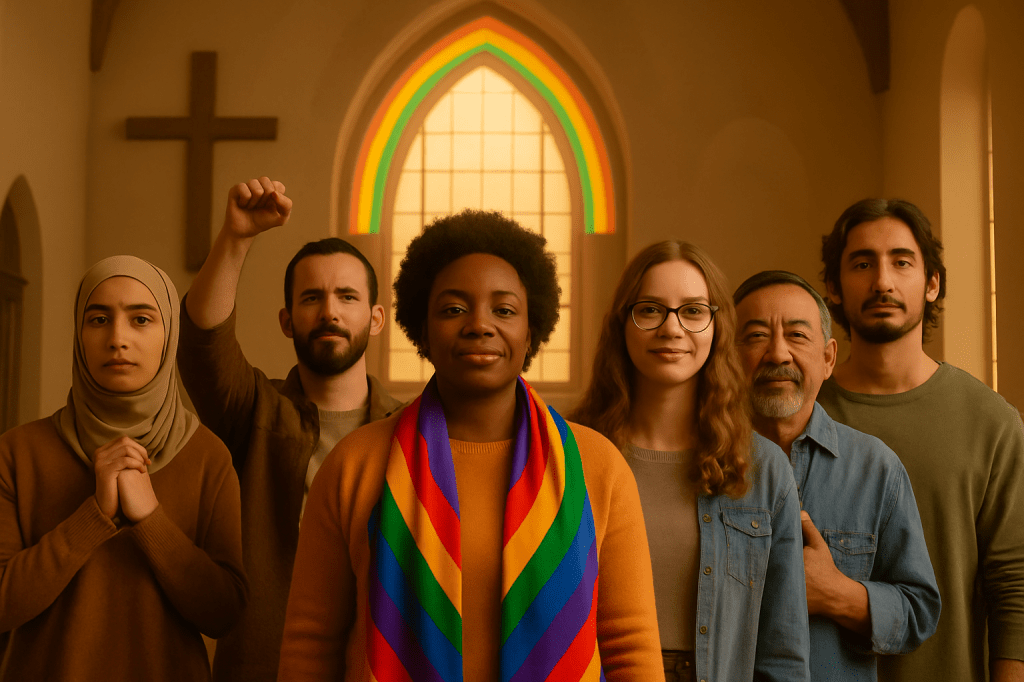
The choice facing the LGBTQ community is stark: stand together as a unified force committed to collective liberation, or allow opponents to divide and isolate the most vulnerable among us. The data makes clear that opponents fear our collective power – that’s why they work so hard to divide us. When we stand together, building deep coalitions with other movements for justice, we represent an unstoppable force for equality and human dignity.
The government threats facing LGBTQ people in 2025 represent the most serious challenge to our community’s rights and safety in decades. They will not be defeated by individual action or partial resistance. Victory requires that we refuse to abandon each other, that we build the broadest possible coalitions for justice, and that we commit to sustained organizing, legal advocacy, direct action, and political engagement at every level of society.
The teenagers facing harassment in schools, the adults losing healthcare access, the federal employees stripped of workplace protections, and the service members forced out of the military are all part of one fight for one goal: the right to exist with dignity and safety. The data shows us the scope of the challenge, but it also shows us our power when we stand together. In unity, we find not just survival, but the strength to build the just and inclusive society that we all deserve.



 Finding My Voice: Living with Esophageal Cancer